
Planning a Four-Player Crew Around Hood Warfare's Three Capture Corners
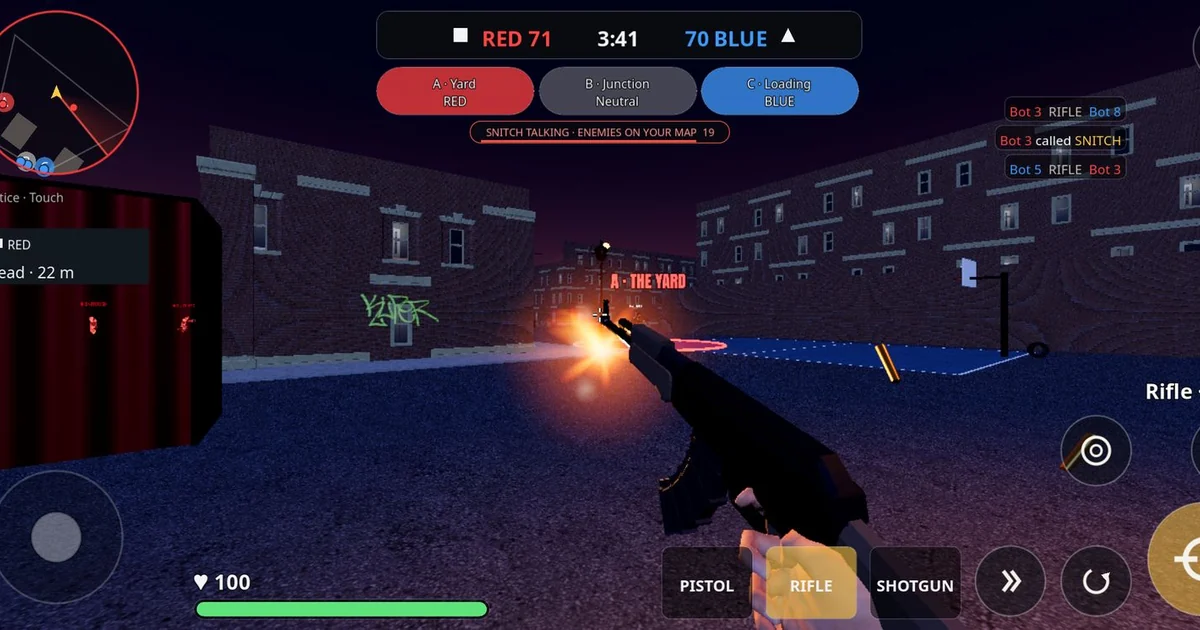
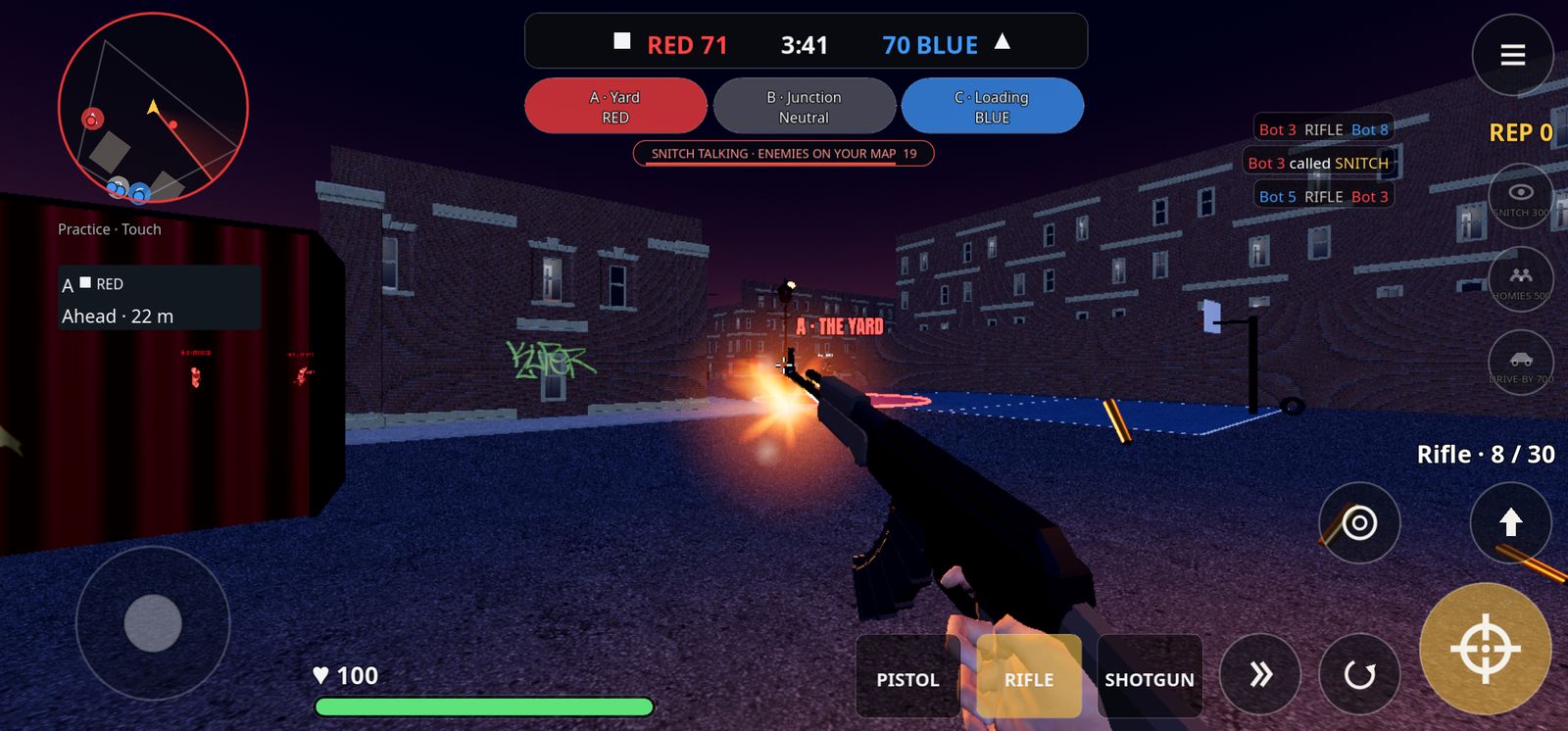
Hood Warfare is a fictional 4v4 hood turf-war shooter for Android, made by ToddMichaelTV and distributed as an APK through the official website, hoodwarfare.net. This guide is owned-network coverage from TechStar Asia, a publisher in our network, and is not an independent third-party endorsement. Its purpose is to help Android players who enjoy fast multiplayer shooters think through how a four-person crew can divide its attention across the three capture corners: the Yard, the Junction and the Loading Dock. The advice below is general planning method rather than a claim about how the game's systems work under the hood.
Start with the three corners as shared objectives
Turf war places two crews of four against each other over three corners. A crew that treats every corner the same usually spreads itself too thin, while a crew that picks one corner to ignore often loses the map without understanding why. Before a match, agree on a simple read of the three positions: which corner your crew will contest first, which one you will fall back to, and which one needs a single player watching it.
Assigning a lead to each corner, even informally, keeps the crew from drifting into one clump of four. Four players can cover three corners with one extra, flexible player who rotates between them based on what the callouts report. Write the assignments down in your team chat so everyone sees them before the first round starts.
Build a pre-match talk around questions, not guesses
A short pre-match conversation prevents most coordination failures. Rather than assuming everyone shares the same plan, ask specific questions. Who opens on the Loading Dock? Who swings to the Junction if the first push stalls? Who will call out enemy movement, and in what words? Who will hold the Yard if two teammates are down?
Good crews also agree on what to do when a plan breaks, because it always eventually does. A useful default is to regroup on the nearest contested corner rather than chasing individual enemies across the map. This keeps the four of you close enough to trade fire and to share information.
Plan call-ins as a team resource
The public brief describes rep earned during a match, spent on call-ins that include snitch (which reveals enemies), homies (AI backup) and drive-by. Because the team shares a limited pool of attention and resources in practice, the most effective crews decide in advance who is responsible for which call-in type. A common pattern is to designate one player as the information caller who uses reveal-style call-ins, one as the pressure player who prefers backup, and let the rest keep flexible options.
Avoid spending rep reflexively the moment it becomes available. Ask whether the call-in will change the outcome at the corner your crew is contesting right now. Coordinating this in short spoken or written signals, such as naming the corner before naming the call-in, keeps teammates from duplicating effort. Note that this guide does not assume how rep is distributed among teammates; check in-game behavior yourself before relying on any pooling assumption.
Choose loadouts that match your corner roles
The game offers nine guns across pistol, rifle and shotgun slots, along with several magazine types, light and heavy armor, grenades and medkits. Not every loadout suits every role. A player holding a corner at medium range may prefer a rifle and a medkit, while a player pushing into a tight space may choose a shotgun. Matching equipment to your assigned corner is more useful than copying the loadout of whoever won the last round.
Check the game's own descriptions for each item rather than relying on assumptions from other shooters. Cosmetic items such as weapon skins and outfits are presentation only and never change stats, so a crew can focus its choices on function rather than appearance.
The RPG cannot be bought. It spawns in roof stashes and marks the carrier on radar. A crew should decide before the match who will watch for it, and how the team responds if a teammate or enemy reveals themselves by carrying it.
A practical pre-match checklist and a note on verification
Before each session, consider this simple checklist: confirm that all four players have the same build of the game installed; agree on corner assignments for the Yard, the Junction and the Loading Dock; name one player for information calls and one for pressure; decide who watches for the RPG; and agree that the crew regroups rather than chasing isolated targets.
On the official download page, checked on 2026-10-29, the public build was listed as v0.3.0-beta, build 74f1651, requiring Android 10 or newer on 64-bit devices, with an APK of roughly 290 MB. The same page lists a $1 one-time online-play unlock for new players, with no subscription, and says free access is retained for players who joined during the beta. These terms may change, so check the official download page before you install or purchase anything. Also note that a newer internal API or test build is not proof of a new public APK release, and a short build label is not the APK binary checksum.
The official site describes Turf War as available and lists Free-for-All, Team Deathmatch and additional maps as coming in a future update. Treat those as planned, not released. The site also describes bots filling empty slots in matches. No player counts, independent reviews or performance benchmarks have been verified, so plan your crew sessions on what you observe yourself.